Last updated November 18, 2026

Free written scope consultation - allowances, timeline, and change-order rules on paper before a single trade is scheduled
Driveway & Pavers Maintenance Checklist for Pomona Homeowners
Most paver manufacturers publish maintenance intervals based on temperate-climate testing, and in Pomona those intervals can be off by 30 to 40 percent. A driveway that looks fine on a spec sheet in a mild market breaks down faster here, because summer heat regularly cresting 100°F cooks the joint sand, dries the sealer, and opens hairline gaps a full season ahead of what the label assumes. Homeowners who follow the packaging end up with weed-choked joints and spalling faces years earlier than they expect. This guide walks through what actually happens to driveways and pavers in Pomona, how to time inspections to the real local calendar, and when a surface touch-up is no longer enough. You’ll learn why resealing here follows a different clock, how to read polymeric sand failure before ants move in, and how to tell a wear problem from a base problem.
Quick Answer
Driveway pavers in Pomona need resealing every 2 to 3 years rather than the 4 to 5 years most labels suggest, because summer heat near 100°F breaks down sealer and joint sand faster than temperate-climate testing predicts. Walk your driveway for loose sand, widened joints, weeds, and surface dulling twice a year – once at the end of the hot season and once after winter rains. If the pavers themselves rock, sink, or spread at the edges, the problem is the base, not the surface, and it needs professional re-excavation rather than a reseal.
Styles & brands we work with
- Kitchen remodeling
- Bathroom remodeling
- Home additions & ADU
- Roofing
- Windows & doors
- Driveway & pavers
- Fence
Table of Contents
- Why Pomona Pavers Age Faster Than the Label Says
- How to Spot Polymeric Sand Failure Early
- Resealing Schedule for Belgard and Tremron Pavers
- The Pomona Maintenance Calendar: When to Inspect
- Oil, Tire Marks, and Clay Pavers: Cleaning Protocols
- Surface Wear vs. Base Failure: How to Tell the Difference
- Concrete Driveway vs. Paver Driveway Care
- Drainage, Slope, and Water Movement
Why Pomona Pavers Age Faster Than the Label Says
Paver maintenance schedules come from climate testing that assumes mild, steady temperatures and moderate humidity. Pomona doesn’t run steady. Summer afternoons push past 100°F, then the evenings drop hard, and that daily swing works on joint sand and sealers in a way a temperate market never tests for. The sealer film expands and contracts far more times per season than it would in a cooler climate, and polymeric sand loses its binder faster under that same cycling.
The result is a maintenance curve that starts out looking normal and then steepens. Year one, everything is tight. By year two in Pomona, a driveway can show joints that are noticeably wider than the original installation. By year three, if nothing has been done, weed seeds have rooted and the surface has started to look chalky.
Clay-based pavers – the fired brick style – behave differently from concrete pavers under this heat. Clay pavers hold color exceptionally well, but they don’t absorb and release heat the same way, so their joint sand can dry out faster at the surface while the paver face itself stays stable. That mismatch is worth knowing, because it means a clay paver driveway can look perfect on the face while the joints are already failing.
Inland Empire sun also does a number on the joint sand’s polymer binder. The binder needs a small amount of moisture cycling to stay flexible and to hold the fine grains together. Long dry stretches in Pomona starve it, which is why an early-season irrigation splash across the surface (light, not soaking) can actually extend joint life. We’ve seen driveways in neighborhoods like Lincoln Park and Phillips Ranch age noticeably differently based on nothing more than how much shade and how much routine watering they get.
How to Spot Polymeric Sand Failure Early
The trick to catching polymeric sand failure early is to know what “early” looks like before the visible problem shows up. Once weeds and ants are visible, the failure is at least a season old and you’re cleaning up, not preventing.
Early-stage failure shows up as:
- Chalky or dusty surface near joints. Rub your thumb across a joint. If you come away with white grains rather than clean paver face, the binder is breaking down.
- Visible joint depth. Joints should sit about 1/8 to 3/16 inch below the paver face. When they drop to a quarter inch or more, sand is escaping.
- Loose grains after dry weather. After a week of dry heat, sweep the driveway. Sand loosening from the joints and drifting onto the pavers is a failure warning.
- Weed seedlings, not weeds. Tiny seedlings poking up in a joint mean the top layer of sand is porous. Full-grown weeds mean the sand is gone and the base is exposed.
- Ant trails. Ants follow soft, workable sand. When you see them working a joint consistently, the joint is no longer properly bound.
Polymeric sand failure in Pomona tends to start at the outer edge of the driveway, where sun exposure is highest and where water runs off first. Check the exposed boundary before you check the center. If a single joint line at the edge is failing, that’s a simple top-up. If failure covers a full lane width, plan a full joint replacement.
One detail most homeowners miss: polymeric sand failure is often a symptom, not the disease. If you’re topping up joints in the same spot year after year, the base underneath is likely letting water sit and wash sand out, which is a job for a professional before you spend on more sand.
Resealing Schedule for Belgard and Tremron Pavers
The short answer for Pomona: plan on resealing your Belgard pavers at the end of each dry season, on roughly an 18 to 24 month rotation, and your Tremron pavers on a 2 to 3 year cycle. That’s ahead of the label, and it’s what this climate actually demands.
Both brands manufacture good pavers with published engineering specs and warranty programs. The difference is in formulation and joint configuration, not quality. Belgard’s design-forward lines – like the popular textured and slab styles – tend to have tighter joints; those joint systems lose their sand more slowly but reseal with more attention to detail because a mismatched top-up looks obvious. Tremron’s family of pavers, including the standard driveway lines, offers wider joints that sand top-up more forgivingly but hold heat longer and benefit from a sealer that handles high surface temperature well.
Resin-bound jointing compounds (a newer alternative to polymeric sand) have changed the maintenance math a bit. They carry a higher material cost, but they stay flexible and resist erosion better through dry cycles. For Pomona homeowners resealing a driveway that’s already needed two rounds of sand top-up, upgrading to a resin joint system is worth a conversation with your installer.
Sealers come in three families worth knowing:
- Penetrating/siloxane sealers. Absorb into the paver, don’t change the look, and typically last 2-3 years in Pomona heat.
- Acrylic film-formers. Offer a wet-look finish and stronger stain resistance, but the film is what deteriorates fastest under 100°F cycles. Expect a shorter effective life here.
- Urethane/polyaspartic. Longest-lasting and most temperature-tolerant, at a higher upfront cost. Best fit if you want a longer reseal interval and are okay paying more.
Whatever the sealer, the prep matters more than the product. Sealer applied over failing joint sand traps moisture and looks cloudy within a season. Sand first, seal second.
The Pomona Maintenance Calendar: When to Inspect
Generic advice tells you to inspect in spring and fall. Pomona’s actual weather calendar calls for something different, and the timing matters because it determines whether you catch problems before the season that makes them worse.
- Late August: This is the peak heat check. Walk the driveway in the cool of early morning – around 7am – and look for joint sand loss, chalky surfaces, and edging that has shifted. This is the inspection that catches sealer breakdown before it becomes joint failure.
- October, after the first cool spell: Check the joint lines at the outer edges and around the garage apron. This is when you’ll see the results of the summer’s punishing sun reflected in widened joints.
- Late January or early February: Mid-winter in Pomona is the shallow wet season. This is the check for drainage issues, pooled water lines, and any paver rocking that starts to show when the base softens.
- March before heavy use season: This is the ideal reseal window. Moderate temperatures and low rain risk mean a sealer can cure properly. In July, most sealers cure too fast and can fail prematurely.
- After any major rain event or storm runoff: Look at where water exited the driveway. If it carved a channel along the edges, that’s your drainage trigger for a professional look.
Two of those checks a homeowner can do without tools. The August and January inspections take fifteen minutes with a broom and a careful walk. The March reseal and any drainage fix is the one that benefits from a professional eye.
The neighborhood layout in Pomona affects timing. Homes in areas with more street tree canopy hold moisture longer and shade the driveway from peak sun – those driveways can extend their inspection interval by a few weeks. Homes on fully exposed lots, particularly in newer developments on the northern and eastern edges, should stick to the strict calendar.
Oil, Tire Marks, and Clay Pavers: Cleaning Protocols
Different driveway materials need genuinely different cleaners. This is one of the most common mistakes in Pomona, because homeowners treat a clay paver driveway the same as a concrete slab and end up permanently etching the surface.
Concrete strip driveways are forgiving to most degreasers. They’re porous but homogeneous, so a general-purpose concrete cleaner, a stiff brush, and a low-pressure rinse will pull up most oil stains. Tire marks usually come off with a light scrubbing. The main worry with concrete is aggressive acid washing, which dulls the finish and opens the surface to faster staining later.
Clay pavers need a different approach:
- Skip acid-based cleaners entirely. Muriatic acid is standard for concrete but will damage clay paver faces and joint sand. Use a pH-balanced paver cleaner instead.
- Handle oil differently. Oil on clay pavers wicks into the paver body and the joint sand. Apply an absorbent powder (kitty litter or fine sand) to the fresh stain, let it wick for 24 hours, then brush clean before any washing. Rushing to a wet cleaner spreads the stain.
- Tire marks on clay pavers are mostly sealer stains. If the paver was sealed, tire rubber scuffs the film. A reapplication of the same sealer dissipates light scuffs; heavy marks need gentle buffing before reseal.
For both materials, pressure washing is a tool that does more harm than good at high PSI. Anything above 1,500 PSI on pavers will blow sand out of joints and pit soft paver faces. Stick to lower pressure with a fan tip, and always walk the joint sand before and after.
Rust stains are the other one. They don’t surface on a sealed driveway often, but irrigation water or furniture on an unsealed one can leave iron marks. A dedicated rust remover formulated for masonry is the only safe fix, and it should be spot-tested first.
Surface Wear vs. Base Failure: How to Tell the Difference
The single most expensive maintenance mistake is treating a base failure as a surface problem. When the base under a Pomona driveway fails – from poor compaction in the original installation, from root movement, or from water pooling against the sub-base – no amount of sand, sealer, or weed killer fixes it.
Here’s how to tell them apart:
Signs of surface wear (DIY maintenance territory):
- Joint sand is loose or low, but the pavers themselves are flat and tight against each other.
- Sealer looks dull or chalky, but the surface beneath is intact.
- Isolated weed seedling growth, or ants in a joint line, without visible paver movement.
- Faint tire scuffs and minor surface stains.
Signs of base failure (professional re-excavation needed):
- Pavers rock underfoot or “teeter” when you step on them.
- Wide joints appear along long runs or in a repeating pattern, not in one edge zone.
- Sinking or low spots pooling water, especially near the garage apron.
- Edging that has spread outward, allowing the outer course of pavers to shift laterally.
- A hollow sound when you tap the surface with a screwdriver handle.
A problem that’s consistently in the same spot year after year is almost always base. Re-excavation means pulling out the affected pavers, digging out the failed sub-base, re-compacting, re-grading for drainage, then reinstalling. That’s a real-cost job, but it’s cheaper than watching the problem spread.
We’ve seen this most often in Westmont and the older residential blocks, where driveways were built decades ago with sub-base standards below what today’s installations use. Base failure does not go away on its own, and it does get worse each rainy season. If you tap-test your driveway and hear a hollow under the surface, it’s time to have someone look.
Concrete Driveway vs. Paver Driveway Care
Concrete and pavers have almost nothing in common when it comes to maintenance, even though they answer the same question: get a car from the curb to the garage.
Concrete’s biggest enemy in Pomona is heat cracking. Slabs poured decades ago with minimal control joints or inadequate sub-base can develop cracks that only grow. Hairline cracks get sealed with a flexible concrete caulk; wider cracks or spalling faces usually mean a section replacement. Concrete doesn’t need resealing unless it was finished with a decorative seal that’s now worn. It’s a lower-maintenance surface, but every fix on a damaged slab tends to be a bigger one.
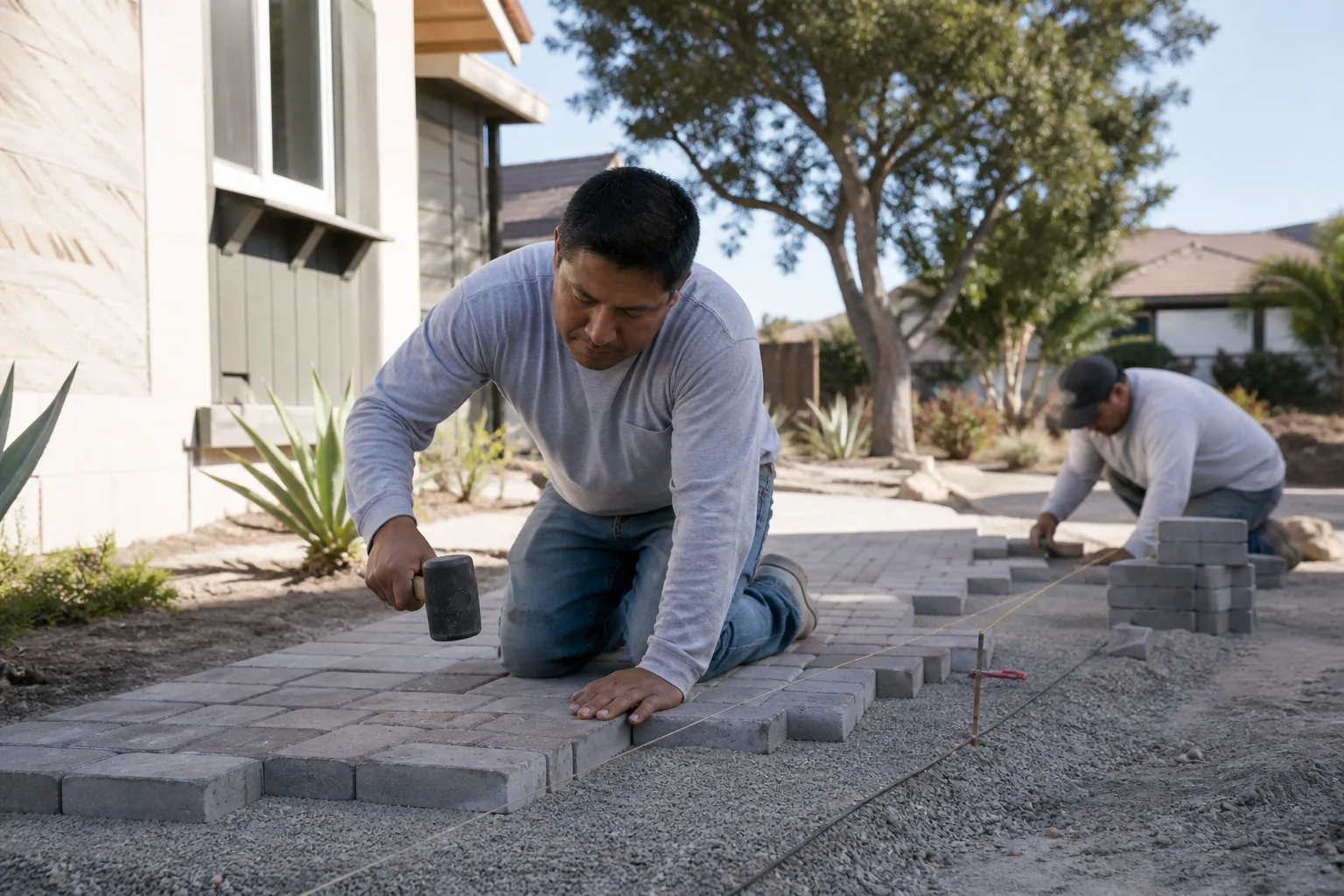
Paver driveways demand more frequent attention – the joint sand and sealer cycle – but their biggest advantage is that individual pavers can be lifted. If a utility line runs under the driveway, or one corner settles, the fix is surgical rather than structural. That’s why the maintenance routine above pays off: the more carefully you manage the sand and sealer cycle, the less often you’re pulling pavers.
Homeowners weighing a replace-in-kind decision usually ask us which is cheaper to live with long-term. In our experience across Pomona, the answer depends on tree cover and how much time you’re willing to put in. A well-maintained paver driveway looks better for longer; a concrete driveway takes less seasonal attention but is harder to repair once it fails.
For homes considering a full driveway replacement rather than a repair, our driveway & pavers page covers the installation side and materials. If you’re also updating the curb appeal around it, we handle fence installation on the same engagement, which keeps a single contractor accountable for the whole exterior frontage.
Drainage, Slope, and Water Movement
Water is a slow assassin on any paver driveway. A perfectly installed driveway with a slightly wrong slope direction will fail years early, and the failure starts as a maintenance problem that gets progressively harder to solve.
Check your driveway’s slope after any significant rain. Water should sheet off toward the street or a designed drain point, not pool against the garage or the house. Pooled water lines are a maintenance signal, not just a visual annoyance – they tell you the surface is holding moisture, which speeds sealer failure and joint sand erosion.
Common drainage problems we see in Pomona:
- Driveways that slope toward the garage, not the street. Often the original grading, sometimes caused by ground settlement. A re-grading at the perimeter usually fixes it.
- Undersized or blocked drainage channels. Channel drains fill with leaves and grit; if the channel hasn’t been cleaned in a year, it’s not doing its job.
- Improperly sloped aprons at the curb. The transition from street to driveway needs a consistent fall. If water stands at the curb edge after rain, your apron slope is the likely issue.
Roof drainage matters too. Downspouts that discharge onto the driveway push water across the surface instead of to a gutter. Redirecting downspouts to a drain or splash block is one of the cheapest improvements a homeowner can make.
The drainage fix is sometimes DIY and sometimes not. Cleaning a channel drain is homeowner work. Re-sloping a driveway section or installing a new drain line usually isn’t. A professional look at your drainage setup is worth doing once, particularly since a small slope problem is much cheaper to correct before it becomes a base problem.
Common Mistakes to Avoid
- Following the national reseal label instead of the Pomona calendar. A 4 to 5 year sealer interval is temperate-climate advice. Under 100°F cycles, a sealer is likely failing at the two-year mark. Matching the label is like skipping the oil change on a car that runs hot.
- Sealing over failing joint sand. This traps moisture and produces cloudy, peeling sealer within a single season. Prepare joints before you seal – sand first, always.
- Pressure washing at high PSI. Anything above 1,500 PSI blows sand out of joints and pits soft paver faces. Use low pressure with a wide fan and check joints after every pass.
- Using muriatic acid on clay pavers. Acid eats joint sand and dulls the paver face permanently. Stick to pH-balanced masonry cleaners on fired-clay pavers, and use acid only on properly cured concrete.
- Assuming a wobbly paver is a sand problem. A rocking paver means the base has loosened – a tap test will confirm it. Sand and sealer won’t fix base movement.
- Overlooking the outer edge and the apron. Polymeric sand failure starts at the sun-exposed outer zone. If you only inspect the center of the driveway, you’ll miss the failure starting at the boundary.
- Ignoring a drainage issue until it becomes a paver issue. A driveway that pools water after rain has a slope problem, not a maintenance problem. Address it early rather than resealing over water damage.
See the difference
 Before
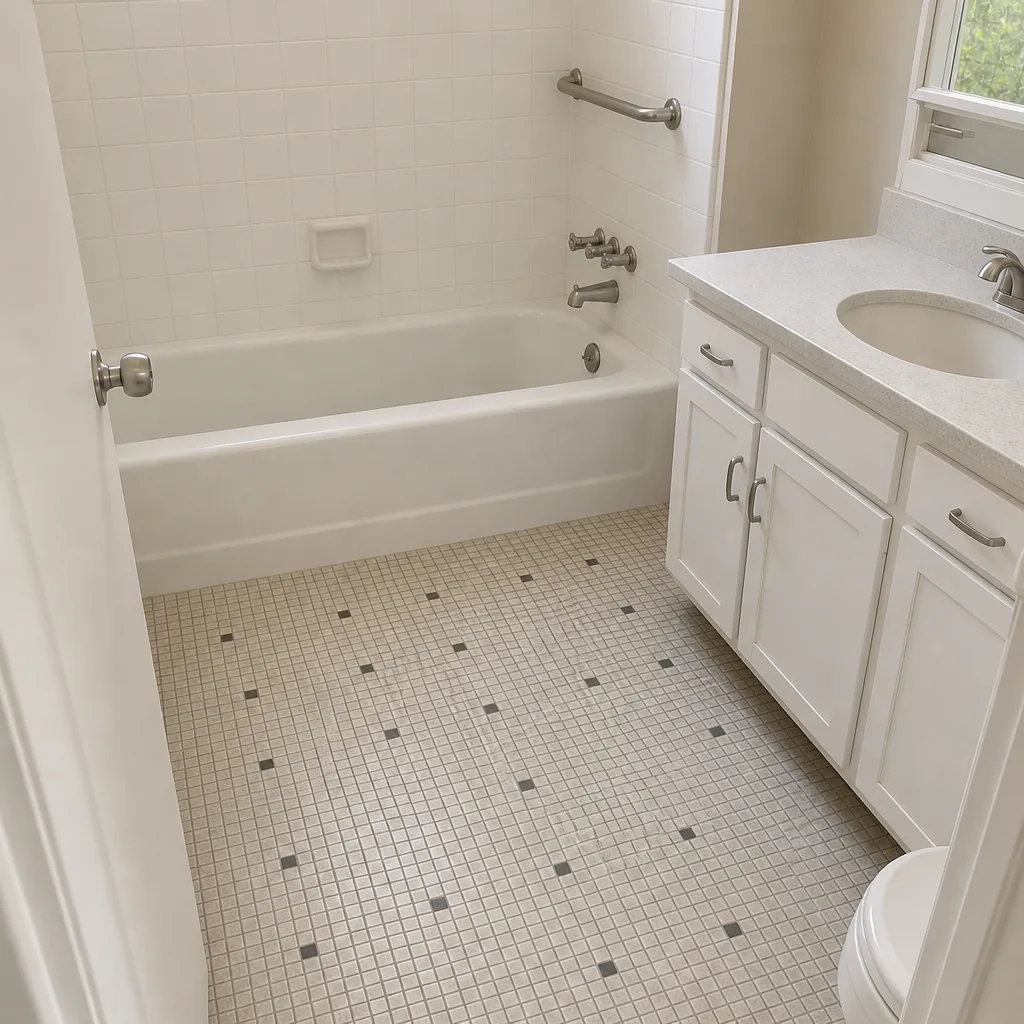 After
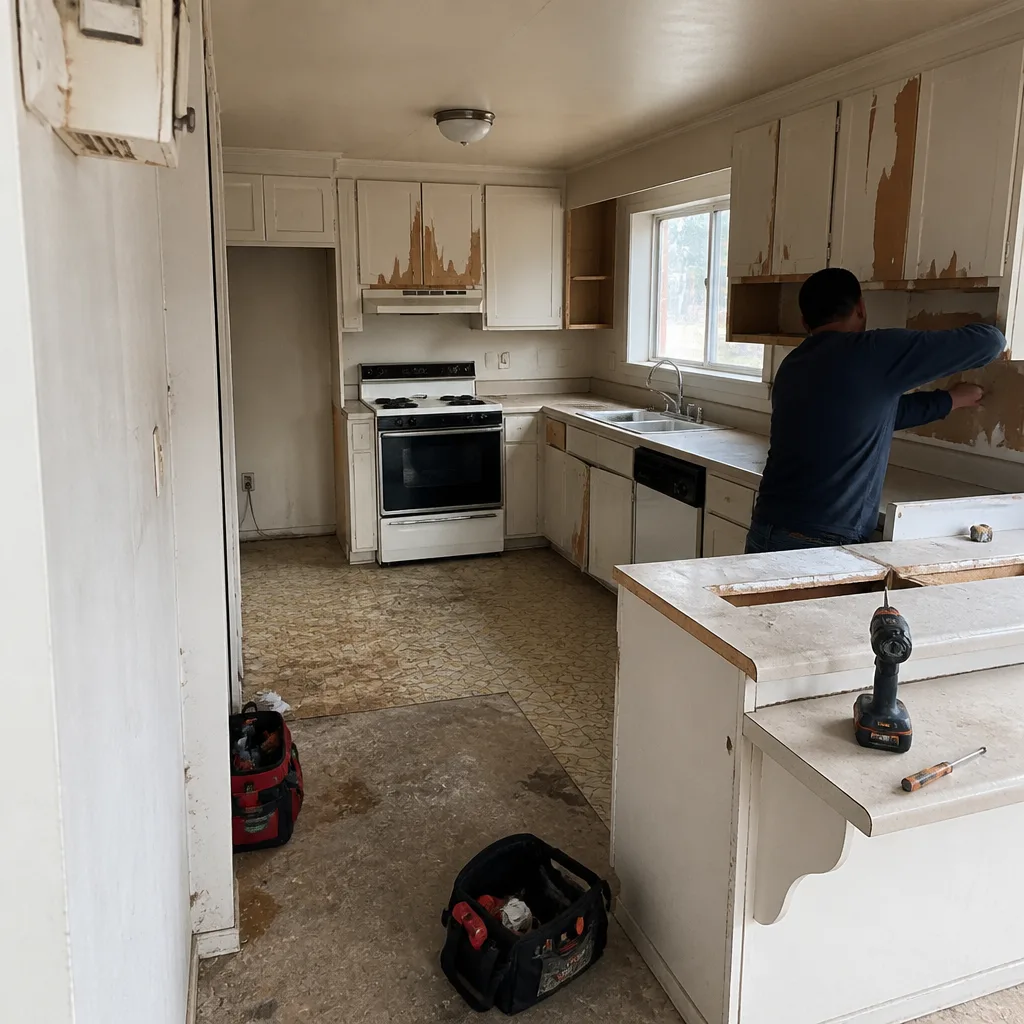 Before
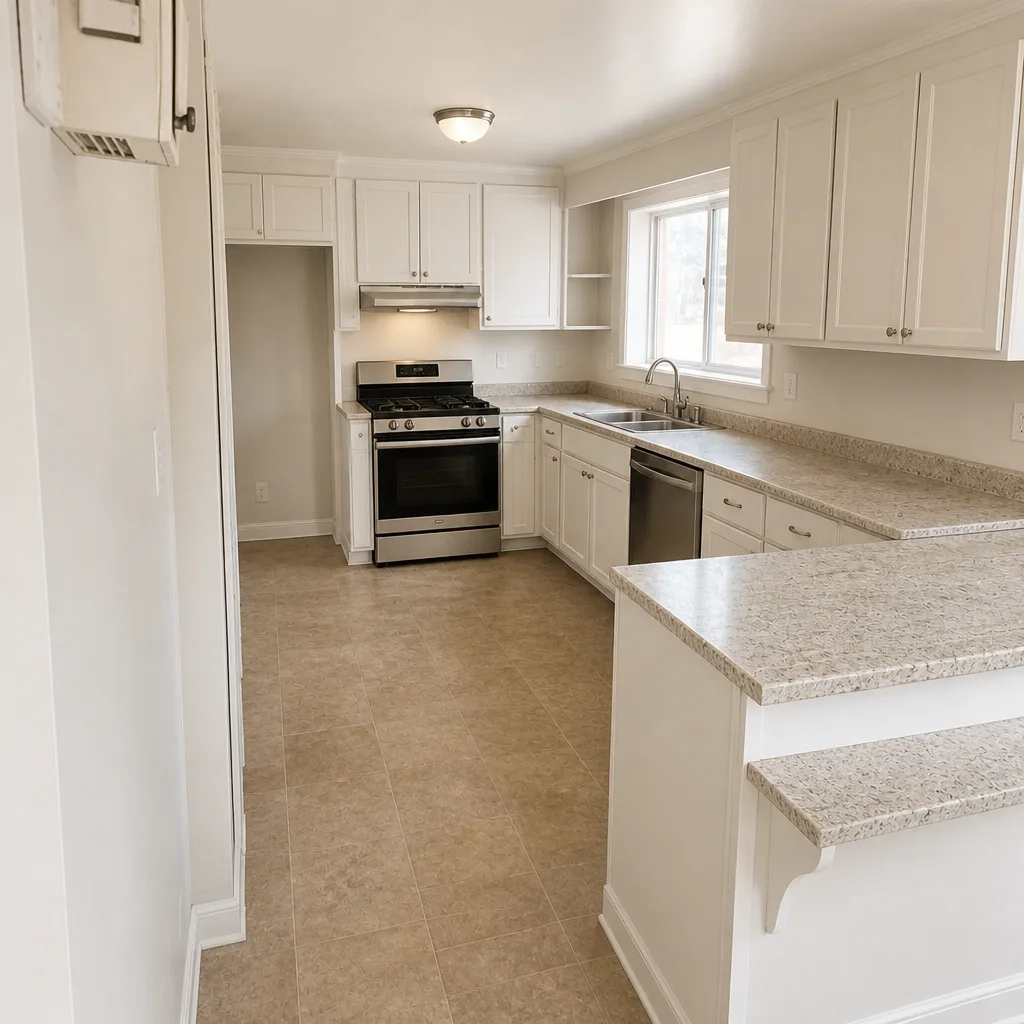 After
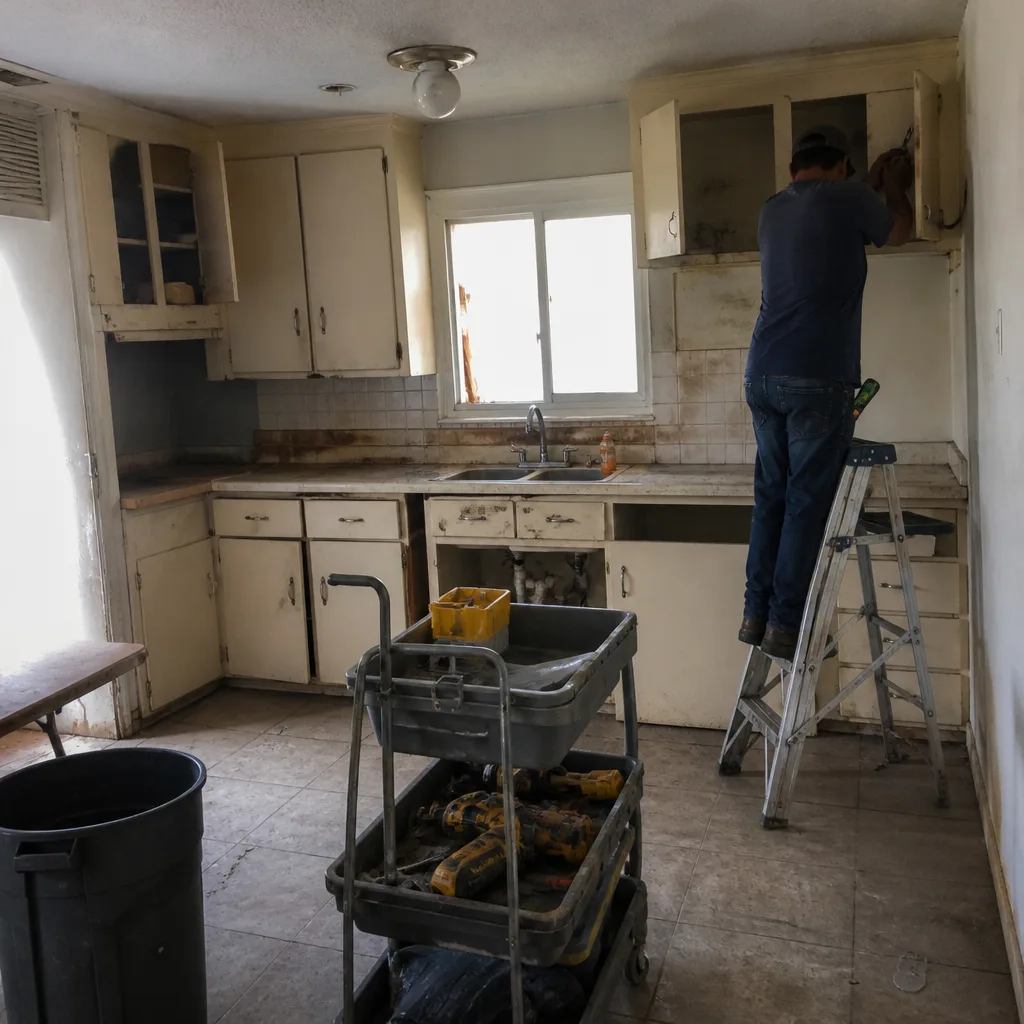 Before
 After
When to Call a Professional
The maintenance checklist above covers most of what a Pomona homeowner can handle personally. The line gets crossed when the issue is base behavior rather than surface wear. If your pavers rock, if joints are consistently widening along long runs, if water pools against the garage after every rain, or if a small area has been topped up with sand year after year – those are professional re-excavation signals. The same is true if a reseal is overdue by more than a season and the surface is already chalky, because sealing over a failing sand layer is a wasted job. Our technicians have up to 8 years of experience working on Inland Empire installations and can diagnose the difference between surface wear and base failure in a short walk. Construction Pomona offers free estimates in Pomona – call (844) 320-5194. We answer 24/7. Fast dispatch from 7am to 7pm, Sunday through Friday.
If your frontage project is part of a broader exterior upgrade, that same free estimate can cover fence installation and driveway & pavers together, so a single contractor is responsible for matching the driveway edge to the fence line and the roof-to-pavement transition reads as one design. And if you’re already considering adding living space alongside the upgrade, our home additions & ADU team can fold that scope into the same conversation.
Frequently Asked Questions
Plan on resealing every 2 to 3 years in Pomona, not the 4 to 5 years a generic label suggests. Summer heat near 100°F breaks sealer down faster than temperate testing accounts for. Belgard pavers with tighter joints benefit from the shorter end of that range; Tremron pavers can often stretch to the 2.5 to 3 year mark. Any sealer applied over failing joint sand will fail early regardless. Call (844) 320-5194 for a free estimate and we’ll walk your driveway and recommend the right interval.
Polymeric sand has failed when you can rub white chalky grains off a joint line, when joint depth is a quarter inch or more below the paver face, or when you find weed seedlings and ant trails in the joints. Visible weeds mean the joint sand is already gone. Catching it at the chalky-grain stage means a simple top-up. Call (844) 320-5194 and we’ll assess joint condition and recommend whether a top-up or full sand replacement is the right move.
Yes – Inland Empire heat near 100°F combined with sharp evening temperature drops accelerates sealer and joint sand failure by an estimated 30 to 40 percent versus temperate-climate testing. The dry summer stretches in Pomona starve the polymeric binder of the light moisture cycling it needs to stay flexible. Maintenance intervals written for a generic national audience leave you exposed. Call (844) 320-5194 for a free estimes inspection that matches your real local conditions.
Yes, but only at low pressure – no more than about 1,500 PSI with a wide fan tip. Higher pressure blows joint sand out of the joints and pits soft paver faces, which creates a bigger reseal job than the wash was supposed to prevent. Check joint depth before and after any wash, and top up sand if joints have dropped. Call (844) 320-5194 for a free estimate if you’re unsure about the joint condition.
Clay pavers need an absorbent powder applied to fresh oil so it can wick out before any wet cleaning – rush to a liquid cleaner and the oil spreads. Concrete is more forgiving and tolerates a general-purpose degreaser directly. Never use muriatic acid on clay pavers, since it eats the joint sand and dulls the paver face permanently. Call (844) 320-5194 if an oil stain has reached the joint line and you want a professional assessment.
Repeated joint re-opening in the same area almost always means a base or drainage issue underneath – the sand is washing out or settling, not simply eroding from the top. Sand top-ups treat the symptom. If the same joints fail year after year, a professional needs to inspect the sub-base and drainage before more sand goes in. Call (844) 320-5194 for a free estimate and a base diagnosis.
Look for standing water or damp patches against the garage, low spots, and edging that has shifted away from the outer pavers. Replace any failed joint sand where water ran. If water is pooling instead of sheeting off, that’s a slope or drainage issue above a maintenance item. Call (844) 320-5194 for a free estimate and a drainage review.
No, and we don’t recommend it for Pomona driveways. A coating sits on top of the pavers and hides joint structure, which then fails invisibly. You end up with trapped moisture, cracked coating, and an expensive removal job before proper maintenance can resume. Stick with penetrating or film-forming sealers designed for masonry. Call (844) 320-5194 and we’ll go over why coating systems don’t fit this climate.
The Bottom Line
Pomona driveways need a maintenance calendar built for Pomona weather, not one pulled from a label. Reseal every 2 to 3 years rather than 4 to 5. Check joint condition at the end of every hot season and after the wet months. Know the difference between surface wear – which you can handle – and base failure, which needs a professional look before the surface damage spreads. Cleaning protocols change with paver material: clay pavers get pH-balanced products and absorbent powders, not acid cleaners. Drainage is the maintenance item that’s easiest to skip and most expensive to ignore. Match sealers and joint sand to brands like Belgard and Tremron with published specs, and your driveway should hold up to Inland Empire heat through the full expected service life. When in doubt on any of it, get a professional opinion before more sand and sealer go down.
Call (844) 320-5194 for a free estimate. We answer 24/7. Fast dispatch from 7am to 7pm, Sunday through Friday. From the driveway to the roofline, Construction Pomona handles driveways and pavers alongside windows, doors, roofing, fencing, and full ADU additions – one contractor relationship across every phase, with 50+ name-brand materials sourced and installed to spec. Whether you’re planning a full paver replacement or need an honest read on whether your problem is surface or base, our team can give you a line-item estimate at no cost. Visit our Construction Pomona page for an overview of the full category list.
Written by the team at Construction Pomona.