
Last updated November 18, 2026








Free written scope consultation - allowances, timeline, and change-order rules on paper before a single trade is scheduled
Construction Warning Signs: A Pomona Homeowner’s Reference Guide
A hairline crack running diagonally from the corner of a window frame in a Pomona home isn’t a cosmetic stucco issue. It’s a potential indicator of differential settlement in clay soil, and every month it goes unaddressed, the repair scope tends to grow by another contractor’s line item. Most warning-sign guides point you to obvious failures: a sagging roofline, water pouring through a ceiling, a driveway slab standing a foot out of the ground. Those are real, but you find them late. The signals worth learning are the quiet ones that show up months before a failure, and they’re visible from the lawn if you know the patterns. This guide walks through what to document, what to measure, and when a signal is telling you something structural rather than cosmetic.
Quick Answer
Construction warning signs in a Pomona home are usually subtle pre-failure indicators: diagonal cracks wider than a quarter inch, stucco that’s pulled away from a window corner, roof shingle granules collecting in a gutter, moisture staining on a wall closest to the exterior, or concrete slabs that have settled into individual panels. Document each with a photograph and a measurement, then have a licensed contractor look at the pattern before you authorize any repair. Early evaluation usually reveals a smaller, less expensive fix than waiting for the failure to become obvious.
Styles & brands we work with
- Kitchen remodeling
- Bathroom remodeling
- Home additions & ADU
- Roofing
- Windows & doors
- Driveway & pavers
- Fence
Table of Contents
- Distinguishing Cosmetic Stucco Cracks from Structural Movement
- Roof Warning Signs You Can Document from the Ground
- Interior Moisture Signals: Waterproofing Failure vs. Plumbing Leak
- Driveway, Patio, and Flatwork Warnings: Base Failure or Surface Wear
- What to Photograph, Measure, and Document Before You Call
- Reading Your Inspection and Contractor Reports Without Being Sold
- When a Warning Sign Is Safe to Watch and When It Isn’t
Distinguishing Cosmetic Stucco Cracks from Structural Movement
Not every crack in a Pomona stucco wall means the foundation is moving. Stucco is a rigid skin over a wood or masonry frame, and it cracks from normal thermal expansion and contraction across a wide seasonal swing. The trick is learning which patterns are cosmetic and which point to movement underneath.
Cosmetic cracks tend to be hairline-thin, less than one-sixteenth of an inch, and they run in short vertical or random directions. They appear near the center of a wall panel, away from corners, and they don’t grow much over a year. Structural movement cracks follow a different grammar: they run diagonally, they radiate from a window or door corner, they’re wider than a quarter inch, and one side of the crack sits higher than the other.
Pattern matters as much as width. A diagonal crack that starts at the corner of a window and heads toward the eave, at roughly a 45-degree angle, suggests one part of the wall is sitting on relative movement while the other sits stable. A horizontal crack running along the base of the stucco, at the sill, suggests the stucco has separated from the framing below. Both are worth a professional look.
- Cosmetic: hairline, random direction, center of a panel, no displacement between the sides.
- Watch list: hairline but growing, or repeated at the same corners on multiple walls.
- Evaluate now: wider than a quarter inch, diagonal from a corner, one side proud of the other, or crack running vertically through both a window and a wall joint.
Pomona’s clay-heavy soil expands when it takes on winter rain and contracts through the long dry stretch into summer. That seasonal movement is a normal part of living on these soils. The question isn’t whether the soil moves, but whether the movement is differential and progressive. Photographs taken three to six months apart will tell you which kind you have.
Roof Warning Signs You Can Document from the Ground
You don’t need to get on the roof to spot a developing problem, and you shouldn’t. A good pair of binoculars and a careful walk around the perimeter will reveal most of what matters. Roof work is steep, high, and dangerous, and anything you can document from the ground is documentation a trained technician can use when they do their own inspection.
From the ground, look for shingle texture disruption first. Curled, lifted, or missing tabs on the south- and west-facing slopes get the most afternoon sun, and that’s where you’ll see the earliest wear. A roof that’s shedding granules will leave a thin sandy residue at the base of the downspouts after a rain. That granule loss is a wear signal, not an emergency, but it’s the earliest visible indicator that an asphalt roof is approaching the end of its service life.
Then look at the roof line itself: a slight sag, dips in the ridge line, or a straight run that has become wavy. Those can be framing or sheathing issues rather than roofing material issues, and they’re worth flagging separately. Finally, check the metal flashing at the chimney, the valleys, and the eave line. Lifted or separated flashing is one of the most common causes of water intrusion on a Pomona home.
- Walk the perimeter with binoculars, noting the slope most exposed to afternoon sun.
- Photograph each slope from the ground at a consistent distance for comparison over time.
- Check the downspout base after a rain for granule residue.
- Look for sag along the ridge and any dip in the eave line.
- Check flashing at the chimney and any roof-to-wall intersection.
- Note date and weather on each photograph so a technician can see the timeline.
When it’s time for an actual evaluation, our roofing lineup spans seven major manufacturers, including CertainTeed, Owens Corning, and IKO, so a replacement can be specified by climate rating, warranty tier, and budget rather than by a one-size pitch. You’ll get more out of that conversation if you arrive with photos and dates.
Interior Moisture Signals: Waterproofing Failure vs. Plumbing Leak
Interior moisture stains can come from two entirely different sources, and telling them apart changes who you call and what the repair looks like. The rule of thumb: waterproofing failures show up on the exterior-adjacent walls and ceilings and repeat after rain. Plumbing leaks show up near a fixture or a plumbing chase and repeat with water use, regardless of weather.
A stain that appears on the ceiling near an exterior wall, darkens after a storm, and doesn’t correlate with any water use is likely coming through the roof or through the wall assembly. A stain under a bathroom wall that grows whether it’s raining or not is more likely a slow supply-line or drain leak. A ring-shaped stain with a darkened center means moisture that’s drying from the edges in; a broad, even stain means ongoing wetness.
Mildew smell is another tell. A musty smell that intensifies after rain, in a room that hasn’t been used, points to exterior moisture getting through a failed flashing detail or a window seal. A musty smell under a kitchen sink points to a slow drain leak. Neither is something to open the drywall over on a hunch. Document it, photograph it, and let the contractor trace it.
- Exterior waterproofing: stain on the exterior wall or ceiling, appears after rain, often accompanied by loose stucco or a lifted flashing detail outside.
- Plumbing: stain near a fixture, grows with water use, may accompany a puddle under a cabinet or a raised water bill.
- Window seal: dark staining at the base of a window frame, or visible water on the sill after a storm.
- Unknown: stain with no weather correlation and no fixture nearby. Don’t guess; document and call.
Insist on tracing the moisture before a contractor quotes a repair. Cutting open drywall to look for the source is a legitimate step a technician may recommend, but installing new drywall without finding the source is how the same stain returns six months later.
Driveway, Patio, and Flatwork Warnings: Base Failure or Surface Wear
A driveway or patio that’s cracked and settled is often misdiagnosed as a concrete problem. Most of the time it’s a base problem. Concrete is only as stable as the compacted gravel or aggregate base underneath it. When the base is thin, poorly compacted, or washed out by poor drainage, the surface fails from underneath regardless of how good the concrete mix was.
Surface wear signs are subtle: fine cracks that don’t change width, a slightly rough texture, or a shallow pop-out where a small piece of aggregate has broken off. Base failure signs are different: a slab that has settled at a joint, a step or offset between adjacent panels, a joint that’s opened more than a quarter inch, or a crack that runs at an angle across the slab and continues to widen over months.
Pomona’s clay soils and dry summers put a specific kind of stress on flatwork. The soil beneath the base shrinks away from the slab edge in dry months and can leave a gap at the perimeter. Water running along that gap, whether from a downspout or from grading, softens the base and accelerates settlement. That’s why the downspout discharge point and the slope of the ground away from the driveway matter more than most homeowners realize.
- Stand at the end of the driveway after a rain and watch where the water runs. Poor drainage sheets across the driveway instead of away from it.
- Measure the offset at any crack or joint with a straightedge and note it in inches.
- Look at the perimeter for a gap between the slab edge and the soil.
- Walk the driveway each season and re-measure the same joints. If the number changed, that’s a base failure signal.
For driveway and patio repairs that go beyond the surface, we install from Belgard, Techo-Bloc, and Cambridge Pavers, which publish engineering specs for their base assemblies. That’s a conversation to have when the base has failed and the right fix is a rebuild rather than a resurfacing. It pairs naturally with driveway & pavers work when the whole slab needs replacing.
What to Photograph, Measure, and Document Before You Call
The single most useful thing a Pomona homeowner can do is build a small evidence file before any contractor visits. It takes an hour with a phone and a tape measure, and it’s the difference between a generic look-around and a targeted evaluation. It also protects you if a contractor’s quote doesn’t match what you’re actually seeing.
Every file needs three things: a wide shot, a close-up, and a scale reference. The wide shot shows where the issue is on the house. The close-up shows the pattern. The scale reference shows how wide it is. Put a coin or a tape measure next to the crack or the settling joint in the close-up; a photograph with no scale loses most of its diagnostic value.
Label each photograph with the date, the approximate time, and the weather in the last 48 hours. That weather note is what lets a technician tell the difference between a dry-season hairline and a wet-season movement crack. The file also becomes your own record if the same issue needs a second opinion later.
- Wide shot of the wall, roof line, or slab from a consistent distance.
- Close-up of the crack, stain, or offset, with a coin or tape measure in frame.
- Written measurement of width and length in inches, and the depth of any offset.
- Date and weather note on every entry, including the last rain.
- Any change since last photo in one line: “same,” “wider by 1/16 inch,” “new small crack below.”
- Location on the property: north wall, driveway apron, ceiling of the hall bath.
The same habit is worth keeping through a rebuild. If you’re evaluating a larger change, whether a kitchen, a bath, or a home additions & ADU project, an existing evidence file gives the designer and the builder something to design against. A file from a photo walk isn’t a substitute for a licensed inspection, but it’s evidence a contractor can use, and it makes the estimate meeting far more productive.
Reading Your Inspection and Contractor Reports Without Being Sold
When you hand a contractor your evidence file, you should expect a report back that maps each finding to a proposed action. A good report will say which items are cosmetic, which are watch-list, and which are structural. It’ll also say which items are safe to defer and which should be addressed before the next rainy season. If a report treats every item as urgent, ask which items can safely be watched.
Ask for line-item pricing and a written scope. A quote that says “crack repair: $X” without describing the repair method is not enough to compare bids on. A repair that injects sealant into a cosmetic crack and a repair that underpins a settled corner are not the same job, and the line items should reflect that. Our written estimate sets the final price, and the scope should say exactly what’s included.
Watch for reports that lump things together: roofing, stucco, and driveway all described as one package. Pomona homes genuinely do have multiple warning signs at once, but the trades are different and the timelines are different. A roof repair in the fall and a driveway base rebuild next spring are two decisions. Getting one quote for both, with line items for each, is a cleaner way to evaluate.
Ask also whether the repairing contractor is also the reporting contractor. When the same company inspects and repairs, ask what the inspection criteria are and whether the report will say which findings are cosmetic. A well-run contractor has no problem with that question. If a report quotes a specific manufacturer’s product, ask which one and why; there’s a real difference between roofing systems from CertainTeed, Owens Corning, IKO, or Atlas, and the answer should reference warranty tier and climate rating, not just the cheapest option on the list.
When a Warning Sign Is Safe to Watch and When It Isn’t
Not every warning sign is a today problem, and treating each finding as an emergency is a fast way to overspend. A hairline stucco crack in a Pomona stucco wall, stable across two photographs six months apart, is safe to watch. A quarter-inch diagonal crack at a window corner that has widened by a sixteenth of an inch since the same six months ago is not. The difference is movement, not existence.
Here’s the practical rule we give homeowners. Cosmetic findings get a photo walk twice a year, once in the spring after the wet season and once in the fall before the dry one. Watch-list findings get a monthly photo and a measurement. Active-movement findings get scheduled evaluation now. The monthly habit takes ten minutes and catches the change while the repair is still a repair rather than a reconstruction.
- Safe to watch: hairline, random direction, no change in six months, no moisture, no displacement.
- Watch closely: hairline but growing, repeated pattern at corners, moisture staining that didn’t previously exist.
- Evaluate now: displacement between the sides of a crack, a settling joint, an offset in flatwork, moisture that correlates with rain, active sag or dip in the roofline.
- Not a homeowner task: stepping onto the roof, opening exterior walls, or lifting stucco. All of these carry injury or damage risk and belong to a trained technician.
If a finding is in the evaluate-now category, call rather than wait. Whether it becomes a stucco repair, a waterproofing correction, or a foundation review, an early evaluation is almost always a smaller invoice than a late one. If it turns out to be a driveway or patio that needs rebuilding rather than resurfacing, that conversation is best had in daylight, with your file in front of you.
Common Mistakes to Avoid
- Treating every crack as cosmetic. The first reflex is to call a hairline crack a paint issue and patch it, which hides the evidence a technician needs. Photograph and measure first, then decide.
- Letting a contractor diagnose without a scope document. A verbal assessment that “the whole wall needs rebuilding” without a written scope of what’s included and what isn’t is not something to sign.
- Cutting open drywall to look for a moisture source. This is a trained technician’s job in a wall assembly, and the wrong cut can make the moisture problem worse. Document the stain instead.
- Using a single contractor’s inspector as your only opinion on a structural finding. For any finding that’s in the evaluate-now category, a second look from an independent source is worth the low cost of a second visit.
- Patching the surface without addressing the base. Resurfacing a settling driveway without investigating the base buys one season, not one lifetime. The base is the repair.
- Getting on the roof. Pomona roofs are sloped, sun-baked, and unforgiving. All roof documentation belongs to the ground.
- Ignoring the downspout discharge point. The single most common contributing cause of flatwork and exterior-wall moisture issues is water leaving a downspout at the base of the foundation rather than away from the house.
See the difference
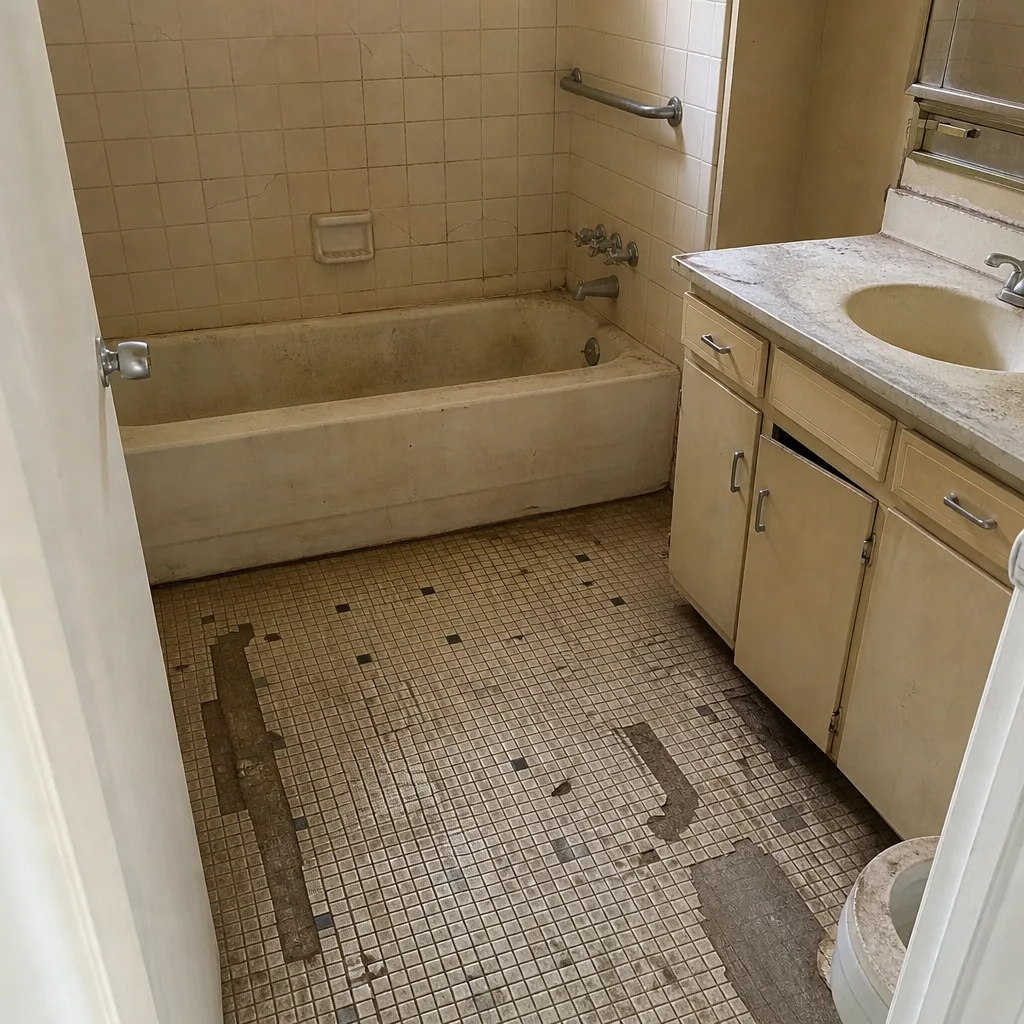 Before
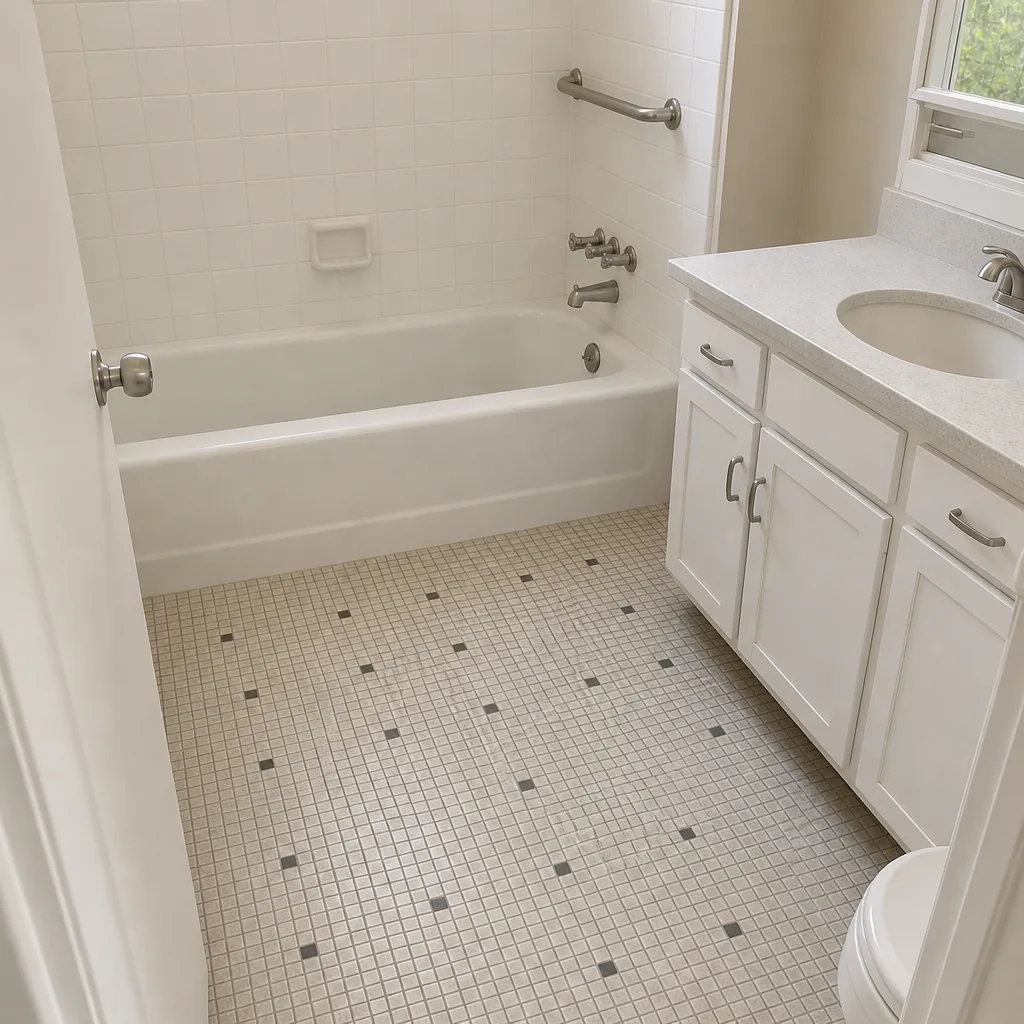 After
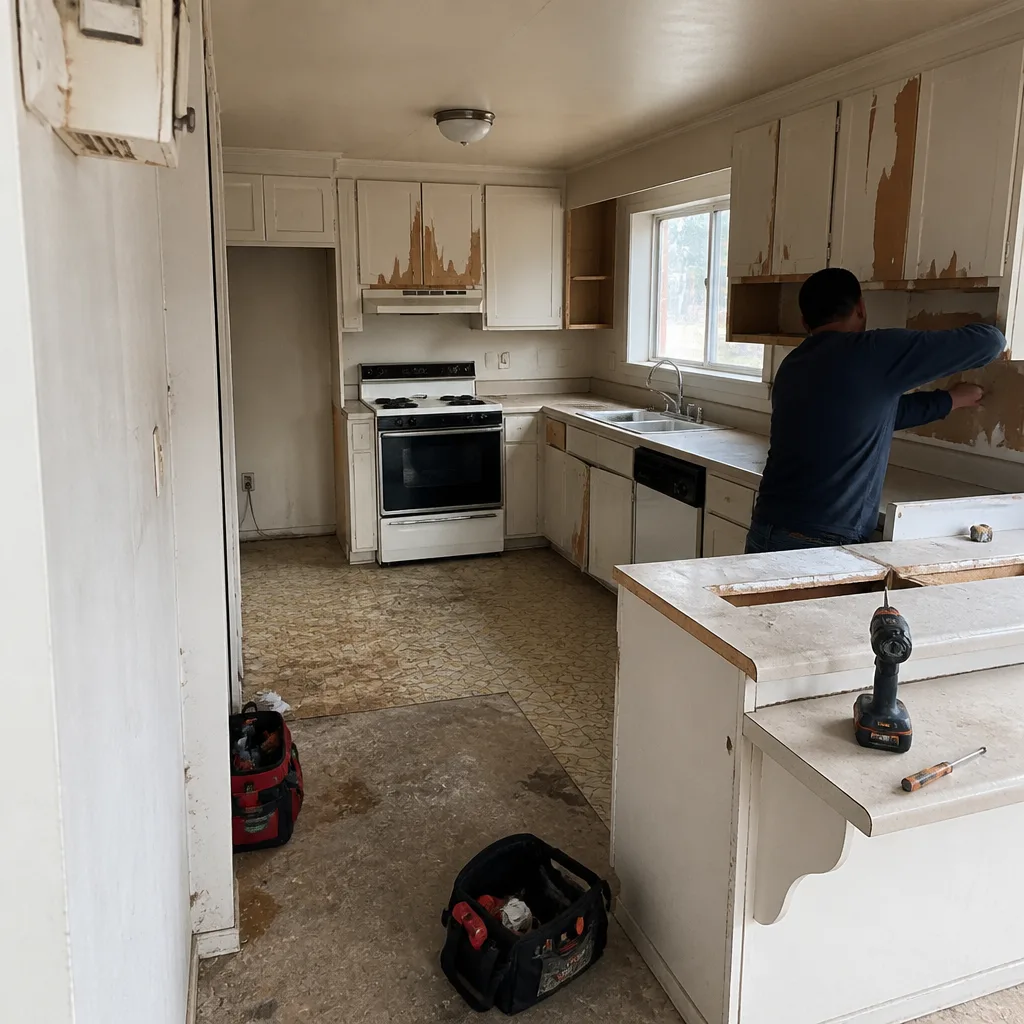 Before
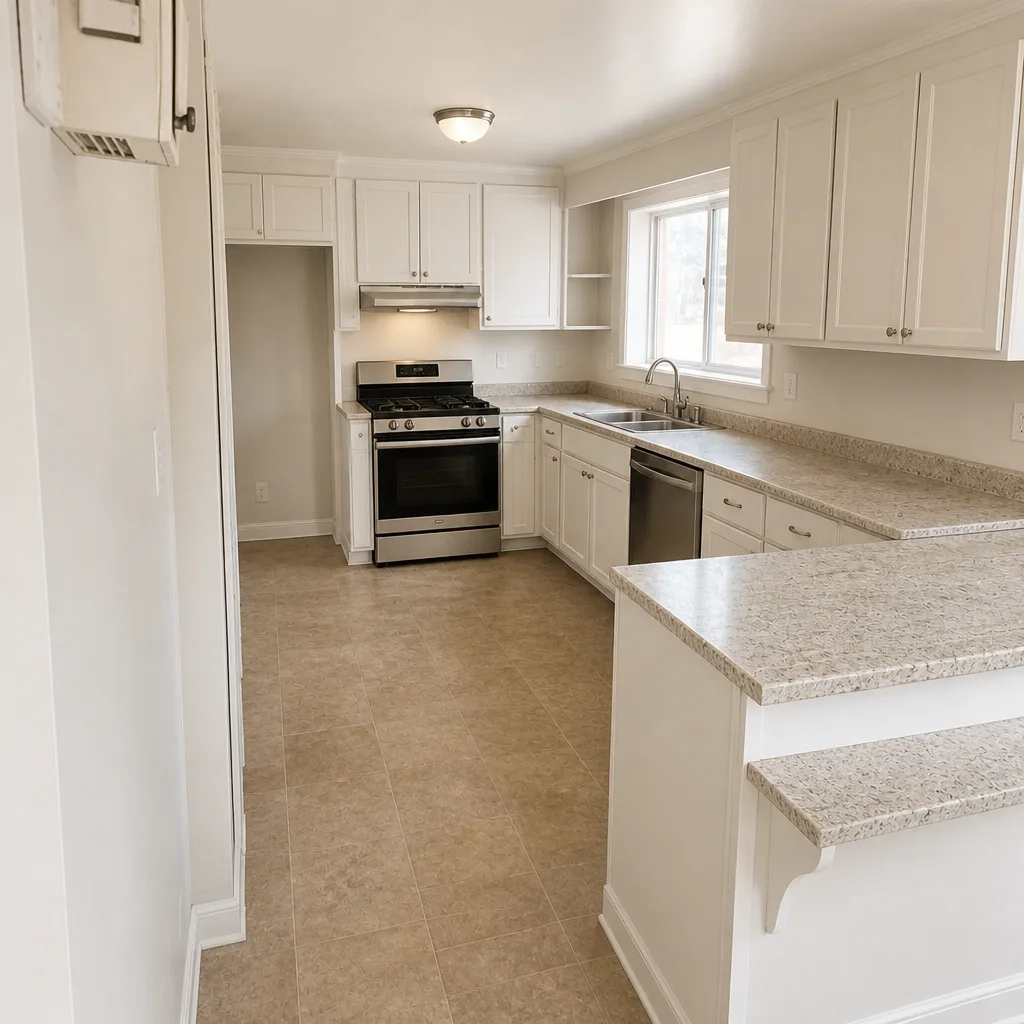 After
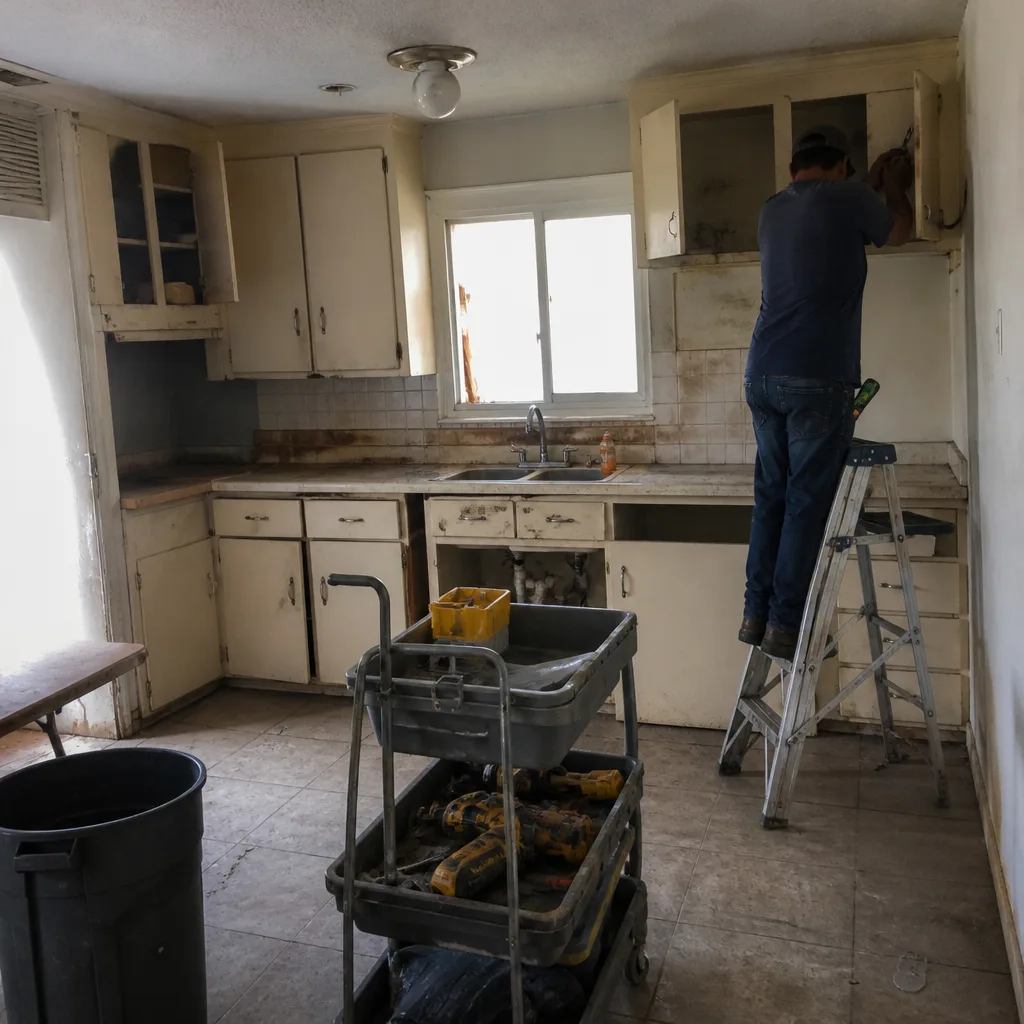 Before
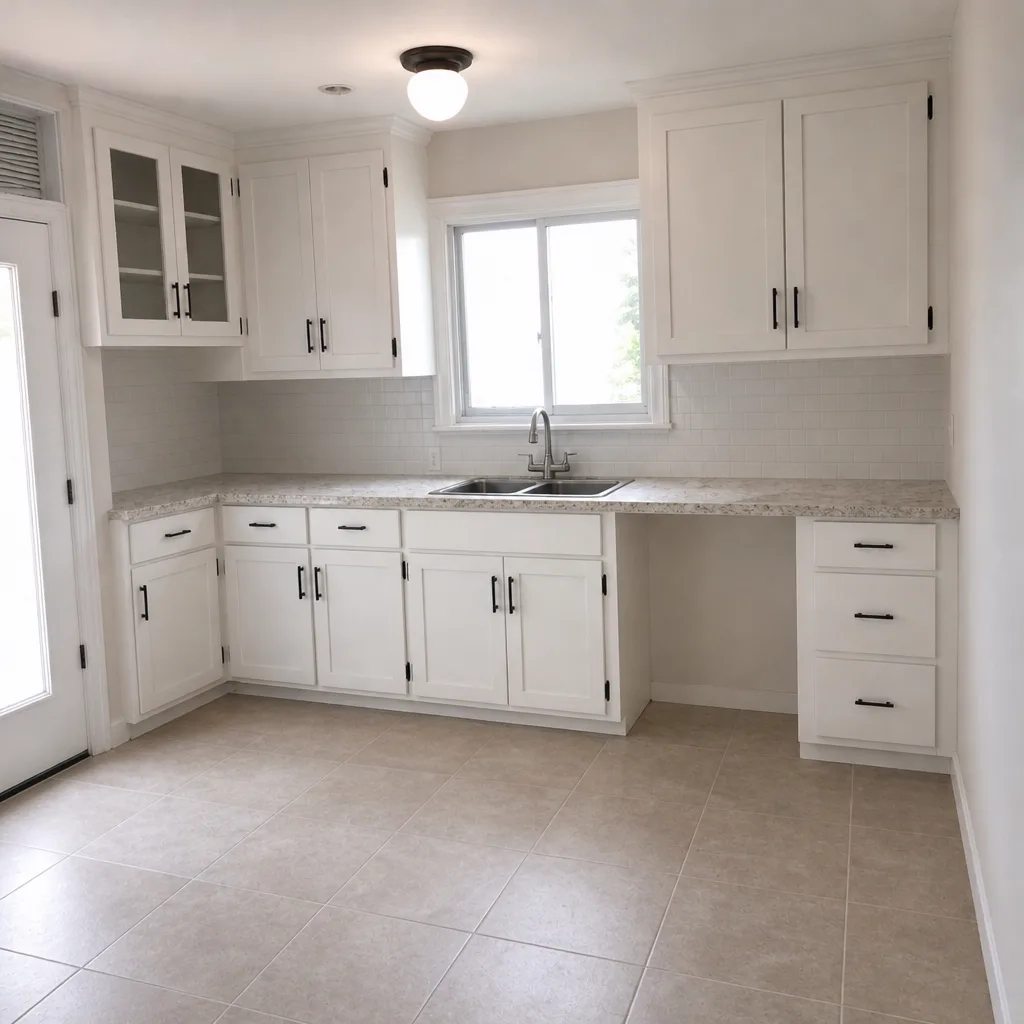 After
When to Call a Professional
Call a licensed contractor when a finding is in the evaluate-now category: a diagonal crack wider than a quarter inch at a window or door corner, a roof line that’s sagging, a moisture stain that repeats with rain, or a flatwork joint that has offset by more than a quarter inch. Also call when you’re unsure, because a trained technician can distinguish a cosmetic finding from a structural one in a half-hour site visit, and that distinction determines whether the repair is a few hundred dollars or a full rebuild. Don’t rely on your own read of a structural finding, and don’t let anyone on a roof unless they’re trained and insured for it. For a kitchen or bath that’s due for a full renovation, the same warning-sign walk should happen before the new design goes in. Construction Pomona offers free estimates in Pomona. Call (844) 320-5194. We answer 24/7. Fast dispatch from 7am to 7pm, Sunday through Friday.
Frequently Asked Questions

The first sign to watch is a diagonal crack at a window or door corner that’s wider than a quarter inch, or one that has widened between two photographs taken months apart. That pattern is the most common early indicator of differential settlement on the soils typical of this area. If a crack at a window corner in Pomona has a stepped edge or one side sits proud of the other, get it evaluated. Call (844) 320-5194 for a free estimate.
A cosmetic stucco crack is hairline, runs in random directions, and sits away from corners. A structural crack runs diagonally from a window or door corner, is wider than a quarter inch, and often shows a step between the two sides. Photograph each crack with a coin for scale and measure it every few months. If the measurement is growing, it’s structural until proven otherwise. Call (844) 320-5194 for an evaluation. Estimates are free.
Yes. Roof warning signs are visible from the ground with binoculars: curled or lifted shingles, a wavy ridge line, granule residue at the downspout base after rain, or lifted flashing at a chimney. Photograph each slope from a consistent spot, note the date and weather, and bring the file to the contractor’s visit. Don’t step onto the roof. Call (844) 320-5194 to schedule an inspection.
A stain that darkens after rain is likely coming from the exterior: a roof flashing, a window seal, or a wall waterproofing detail. A stain that grows when you run a fixture, regardless of weather, is likely a plumbing leak. Both deserve evaluation, but they’re different trades. Document the timing and photograph it after the next rain. Call (844) 320-5194 for a free estimate.
It depends on the base. A driveway that has settled at a joint or offset between panels usually has a base failure, and resurfacing over a failed base will show the same joint offset within a season. A surface crack with no offset and no settlement is a repair. The question to ask a contractor is which one you have. Call (844) 320-5194 to schedule a free estimate and get the answer in writing.
Document it with photographs and a measurement, then call and book an evaluation. We answer 24/7. A call outside dispatch hours is booked into the next opening, Sunday through Friday, 7am to 7pm. If a warning sign looks structural, keep people and furniture away from the area and don’t attempt any repair yourself. Call (844) 320-5194.
The Bottom Line
The warning signs that matter most in a Pomona home are the ones you can document before they become obvious. A quarter-inch diagonal crack, a stain that repeats after rain, a driveway joint that has offset, a downspout that dumps at the foundation: each one is a signal that the repair is still small. Photograph it, measure it, date it, and get it looked at while it’s still a repair. Whether the fix turns into a roof, a window, a fence line, or a whole-property scope, one relationship across the phases is easier to manage than several. Our technicians have up to 8 years of experience, and our job is to help you read the sign correctly, not to sell the largest repair. If you’re ready to have someone look, we’re one call away.
Every project starts with a free estimate, written line-item scope, and a clear plan for what’s included. Construction Pomona works across Construction Pomona, including fence installation when the repair touches the property line. Call (844) 320-5194 to schedule your free estimate. We answer 24/7. Fast dispatch from 7am to 7pm, Sunday through Friday.
Written by the team at Construction Pomona.