


How to Choose the Right Construction Company in Pomona
Most Pomona homeowners mentally fire their contractor the third time a subcontractor they’ve never met shows up at the door. The problem started long before that, back at the kitchen table when they signed with a general contractor who bid work he had no intention of performing himself. Choosing right means choosing control: a company whose scope matches the real complexity of your project, including the trades most contractors quietly hand off. Here’s how to tell the difference before you sign.
If you’d rather have someone walk your property and talk it through, call (844) 320-5194. Free estimates, no pressure.
Key Takeaways
- Ask who actually performs each trade. Self-performed work is easier to control than brokered work.
- Pomona permits, neighborhood HOA overlays, and local soil all affect your project. Local experience shows.
- Read the insurance certificate, not just the words “licensed and insured.”
- A single-source contractor handling roofing, driveway, fencing, and interiors under one contract usually saves timeline and headaches.
Self-Perform vs. Broker: How to Tell Who You’re Talking To

A general contractor who self-performs key trades keeps those crews on his own schedule and standards. One who brokers everything becomes a middleman, and every handoff is a place where quality and timing slip. You can usually tell which one is sitting across from you within ten minutes, if you ask the right questions.
Listen for how they describe their own people. A self-performing contractor says “our framing crew,” “our tile setters,” “our roofers.” A broker says “we’ve got a guy,” “we work with a team,” “our subs handle that.” Neither answer is automatically disqualifying, but you deserve to know which model you’re buying.
The trades that matter most are the ones you can’t easily inspect later: waterproofing behind tile, flashing around a roof penetration, the base prep under a paver driveway. Ask directly how each is handled and who supervises it. If the answer is vague, that’s your answer.
For a project like a bathroom remodel, a kitchen, or a home addition, water intrusion and finish alignment are where brokered jobs fail. We handle the envelope and interior categories under one contract – roofing, windows, doors, fencing, driveways, kitchens, baths – precisely because those interfaces are where accountability gets lost. When you’re exploring options, our home additions & ADU page explains how we sequence a multi-phase build.
Why Pomona-Specific Experience Matters
Pomona isn’t a generic Southern California address. It has its own building department rhythm, its own mix of older housing stock, and neighborhoods where HOA overlays impose design review on top of city permits. A contractor who works here regularly knows which inspections get flagged and which neighborhoods require design approval before you can even pull the permit.
Soil conditions vary across the valley and hillside edges of the city. Foundation and hardscape prep that works on flat, sandy ground may need different excavation and compaction on a sloped lot. Ask any contractor what they’ve encountered on lots similar to yours. Here’s a quick reference for what local knowledge actually covers:
- Permit relationships: familiarity with the city building department’s submittal process and inspection scheduling.
- HOA overlays: awareness that certain neighborhoods impose design and material review beyond city code.
- Soil and slope: how excavation, drainage, and foundation work change on a graded or hillside lot.
- Housing age: older homes often hide knob-and-tube wiring, undersized framing, or original plumbing that affects scope.
Commit that local reality to paper before work starts. A written line-item quote that accounts for Pomona conditions is worth far more than a number pulled from thin air.
The Five Questions That Reveal Quality Control
Every contractor will tell you they do quality work. These five questions reveal whether they actually manage it, because quality control is a process, not a promise.
- Who is on site daily, and what is their role? You want a named supervisor who is accountable for the work, not an absentee owner.
- How do you handle change orders? The right answer involves a written change order with pricing before the work proceeds – no surprises at the end.
- What does your punch list process look like? A contractor who walks the job with you before final payment and documents every item is managing quality, not hoping for it.
- Who pulls the permits, and who meets the inspector? If the answer isn’t “we do,” ask why.
- How do you protect the rest of my house during the work? Dust barriers, floor protection, and daily cleanup tell you how they treat your home.
None of these questions require technical knowledge to interpret. Listen for specific answers with names, steps, and written processes. Vague enthusiasm is the warning sign.
How to Read a Contractor’s Insurance Certificate
“Licensed and insured” is a phrase, not proof. Ask for the actual certificate of insurance and read it – it takes two minutes and can save you a five-figure headache.
Look at three things. First, general liability coverage: a fixed amount may be modest relative to a larger project, and for a six-figure remodel you want a policy limit that comfortably covers the value of your home and the work. Second, workers’ compensation: if a worker is injured on your property and the contractor has no workers’ comp, the claim can land on your homeowner’s policy. Third, verify the certificate names you correctly and covers the full project period.
You can call the insurer listed on the certificate to confirm it’s active. A legitimate contractor won’t blink at that request. One who gets defensive about it is telling you something.
Same goes for permits. Most cities require a permit for structural, electrical, plumbing, and roofing work, and the permit should be pulled in the contractor’s name, with inspections passed along the way. Ask to see the permit before work begins.
Why Single-Source Pays for Itself
It’s tempting to chase the lowest bid on each trade separately – a roofer here, a paver guy there, a cabinet installer somewhere else. What that approach usually buys is a scheduling mess. Each specialist blames the last one for a delay, and you become the project manager without the title or the pay.
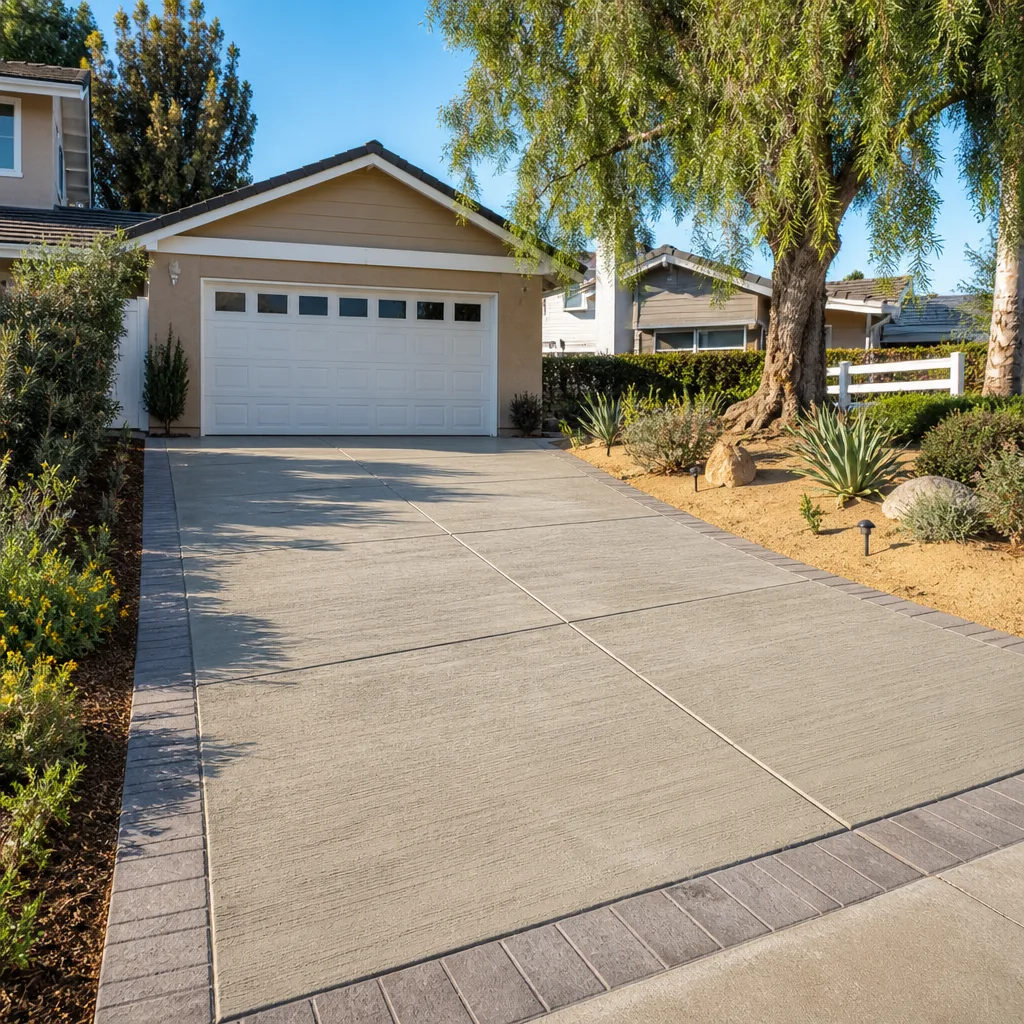
A single-source contractor who handles the whole property under one contract, from the driveway & pavers up through the roofline, puts one party on the hook for the timeline. When a driveway has to be finished before a fence goes up, or a roof has to be closed before interior work starts, the sequencing lives with one company. Accountability has a name and a phone number.
The brand side matters too. When a contractor works from a curated roster of established manufacturers – KraftMaid and Wellborn cabinetry, Cambria and Silestone countertops, GAF and Owens Corning roofing, Belgard and Techo-Bloc hardscape – you get materials with published engineering specs and real manufacturer warranty programs. Material matching by climate rating and warranty tier, not a one-size pitch, is what a premium project deserves. Window and door lines like Therma-Tru and ViewLux fall in the same category: name-brand materials, professional installation, backed by the brand.
Related Services and When to Call a Pro
Some choices in a project are genuinely yours to make, like picking cabinets or choosing a paver color. Others reward a trained eye and a licensed pro. Structural work, electrical, gas lines, and roofing are not weekend projects – an improperly flashed roof leaks quietly for years, and a missed structural detail can cost far more than the work itself. When in doubt, flag it early rather than late.
If your project involves a property line, our fence installation team can help you sort material options and permit requirements. Homeowners planning more living space – whether for family, rental income, or a home office – can review our home additions & ADU guidance on prefab versus site-built options. And for a full review of how we cover every category from the driveway to the roofline, start with Construction Pomona.
What happens when you call
- 1
A real person answersNo phone trees – you reach a local pro.
- 2
You get an upfront price rangeHonest numbers before anyone is dispatched.
- 3
A background-checked tech heads outLicensed & insured, dispatched right away.
- 4
You approve before work beginsNothing starts until you say go.
The Bottom Line
Choosing a construction company in Pomona is really about choosing who controls your project. Look for a contractor who self-performs or tightly supervises the trades that matter, knows local permits and soil, can show active insurance, and puts the whole scope under one written contract. Price matters, but not nearly as much as who’s accountable when something goes sideways.
If you’re in Pomona and need help, Construction Pomona offers free estimates – call (844) 320-5194. We answer 24/7. Fast dispatch from 7am to 7pm, Sunday through Friday. Our technicians have up to 8 years of experience, and every estimate comes as a written, line-item quote.
Frequently Asked Questions
Ask directly which trades the company performs with its own crews and which it subcontracts. A self-performing contractor names those trades and supervises them; a broker defers to “our subs” without specifics. Ask who is on site daily and what their role is.
Ask for the certificate of insurance and confirm both general liability and workers’ compensation are active. For a large project, a modest general liability limit may be inadequate relative to your home’s value. You can verify coverage with the insurer directly, and a reputable contractor won’t object.
Most structural, electrical, plumbing, and roofing work requires a permit from the city building department. Ask your contractor to pull the permit in their name and confirm inspections are scheduled and passed along the way. Verify requirements directly with the Pomona building department before work starts.
A single-source contractor puts one party on the hook for scheduling and quality across trades, which usually saves time and prevents subcontractors from blaming each other for delays. For multi-phase projects involving roofing, driveways, fencing, and interiors, the premium typically pays for itself in coordination alone. Call (844) 320-5194 for a free estimate on your project.
Written by the team at Construction Pomona.
Need Construction Help?
Call Construction Pomona - licensed & insured, here with fast help in Pomona.
(844) 320-5194